





















Many companies still sell via telephone, email or manual ordering processes. This takes time, leads to errors, hampers growth and erodes profit margins. A B2B online shop digitises these processes and creates a central platform for customers, sales teams and internal systems.
With a professional B2B online shop, you can automate orders, pricing logic and customer processes. Your business customers can place orders, view quotes and manage orders at any time, regardless of office hours.
The result:
Request a free consultation
for your B2B online shop
Digital purchasing processes have long been the norm in the business-to-business sector. Today, buyers expect the same level of convenience as they do when shopping online for personal use.
Companies that set up an online shop do not just benefit from more efficient processes. They also create an additional sales channel and improve their interaction with their customers.
In the wholesale and industrial sectors in particular, there is growing pressure to digitise processes. A professional B2B online shop is therefore no longer an option, but an integral part of a forward-looking sales strategy.
A B2B shop operates in a fundamentally different way to traditional retail shops. Business customers expect more complex features, customised pricing and deeply integrated processes.
B2C shop
Standardised prices
Individual orders
Individual customers
Integrations that are rarely necessary
Standard payment methods (PayPal, credit card)
B2B shop
Customised prices
Bulk orders and express orders
Company accounts with roles
ERP, CRM and PIM integration
Invoices, framework agreements
A B2B shop system must therefore offer significantly more than a traditional online shop. It becomes an integral part of a company’s overall IT and process landscape.
A high-performance B2B shop must offer far more than just a list of products. The key lies in features that efficiently map complex business processes.
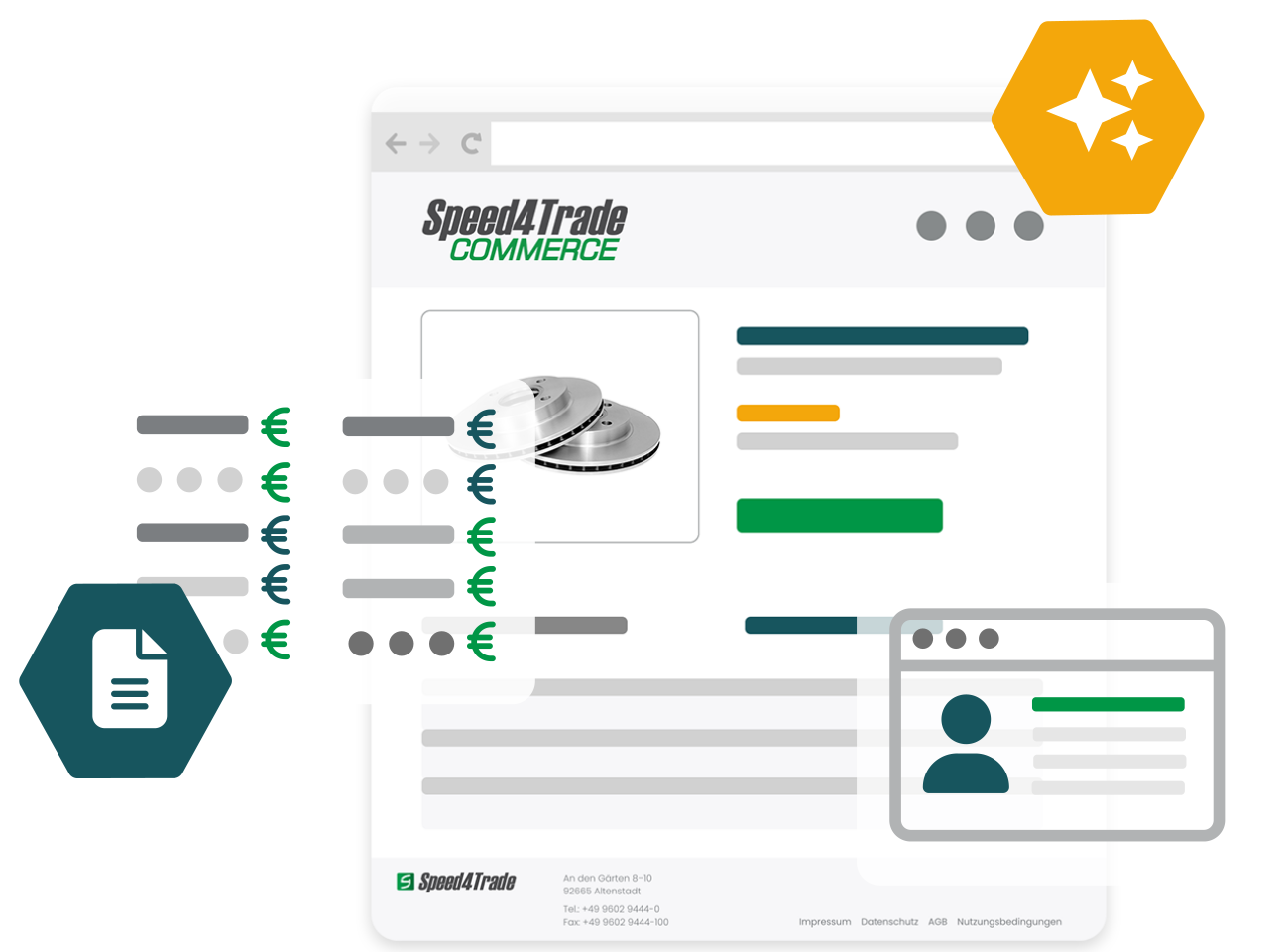
Business customers often have individual pricing agreements. A professional B2B online shop enables:
This way, every customer can see exactly which terms and conditions apply to them.
Business customers often order large quantities or the same items on a regular basis.
Typical functions include:
These features significantly reduce order processing times.
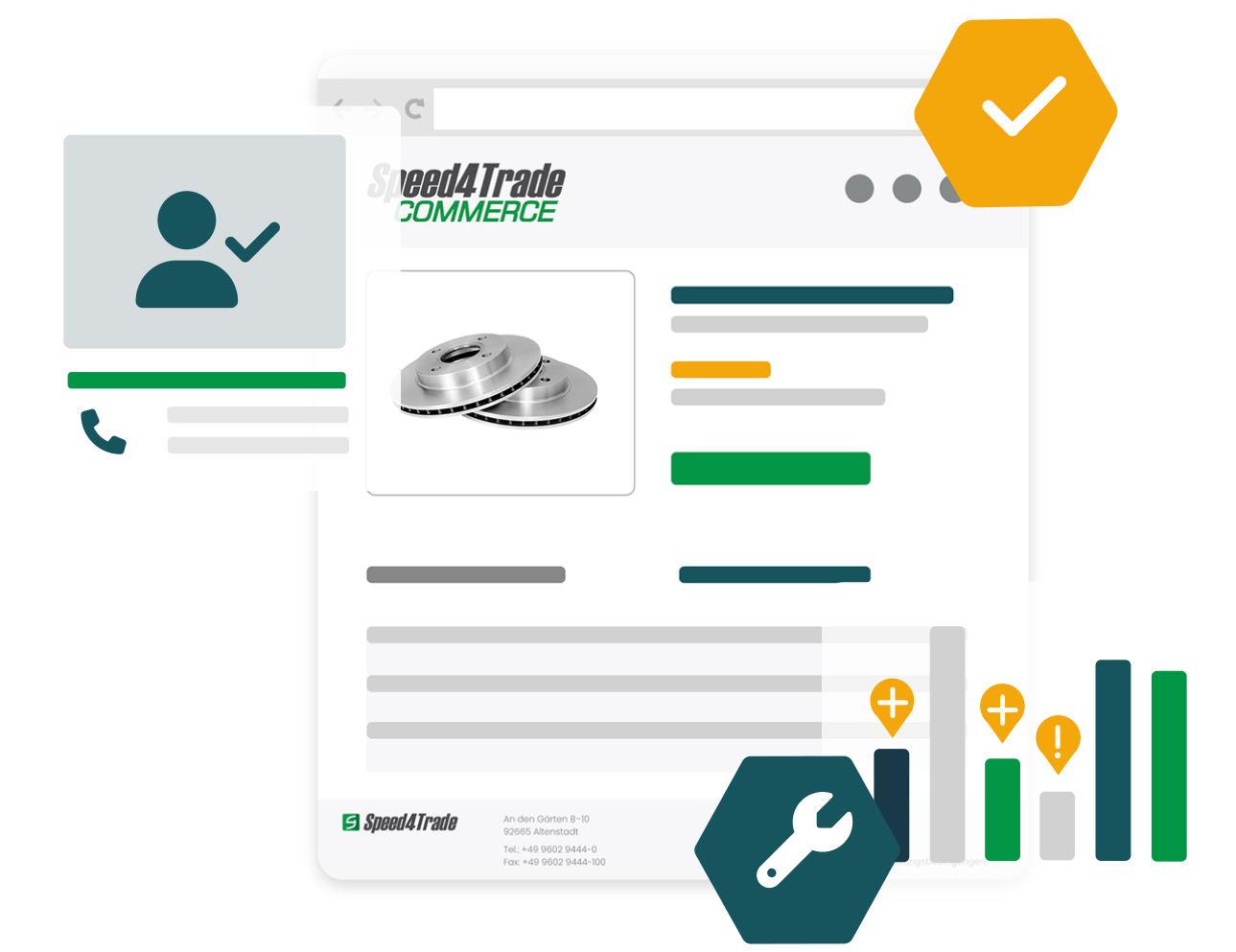
In many companies, several employees place orders.
A professional B2B shop enables:
This enables purchasing processes to be mapped digitally.
A modern B2B online shop reduces the workload in sales.
Customers can independently:
This takes the pressure off internal teams whilst improving the customer experience.
A high-performance B2B shop is not created by software alone. Experience, integration and long-term development are crucial.
Speed4Trade supports businesses from the initial idea right through to day-to-day operations.
We begin by analysing your sales processes. Together, we will define:
This results in a solution that is tailored to your business.
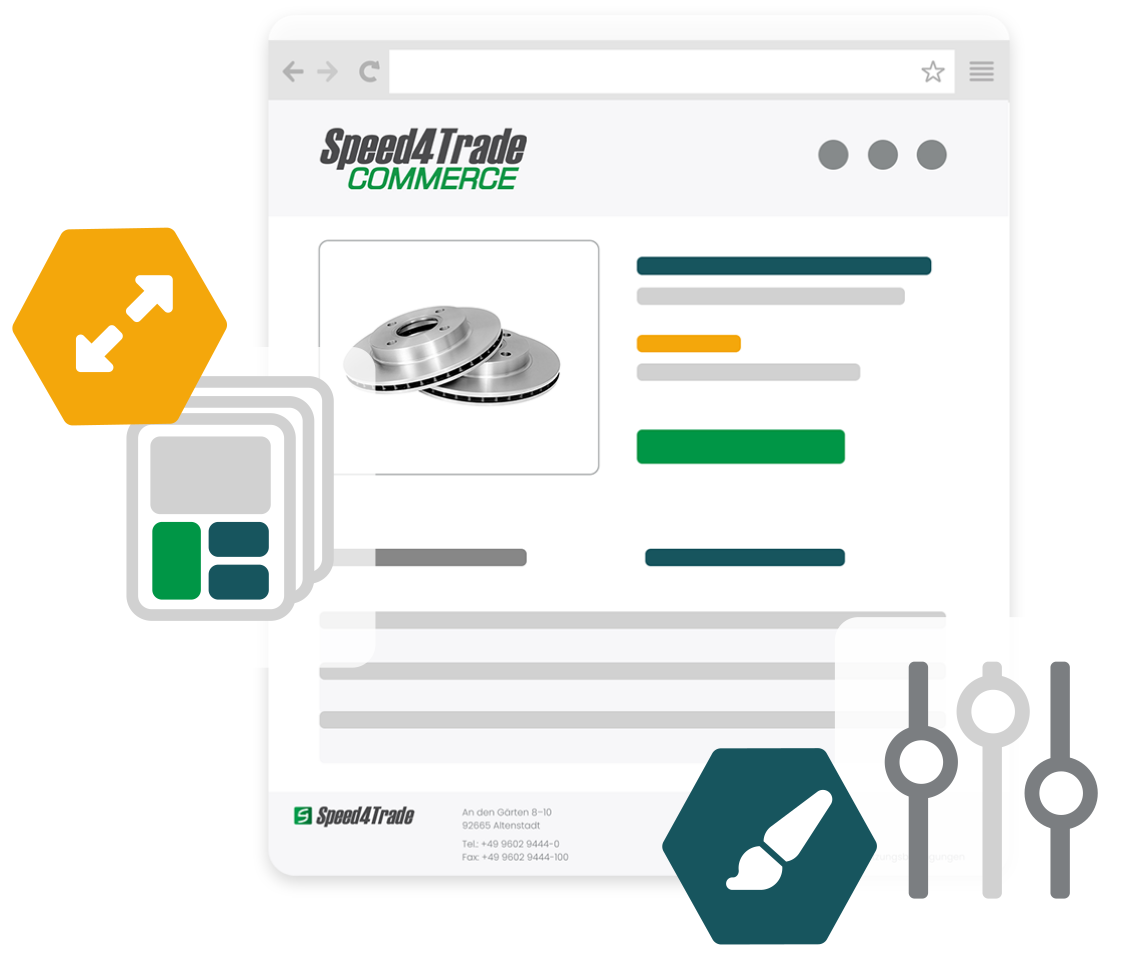
Technical implementation forms the foundation of a successful project.
Typical components include:
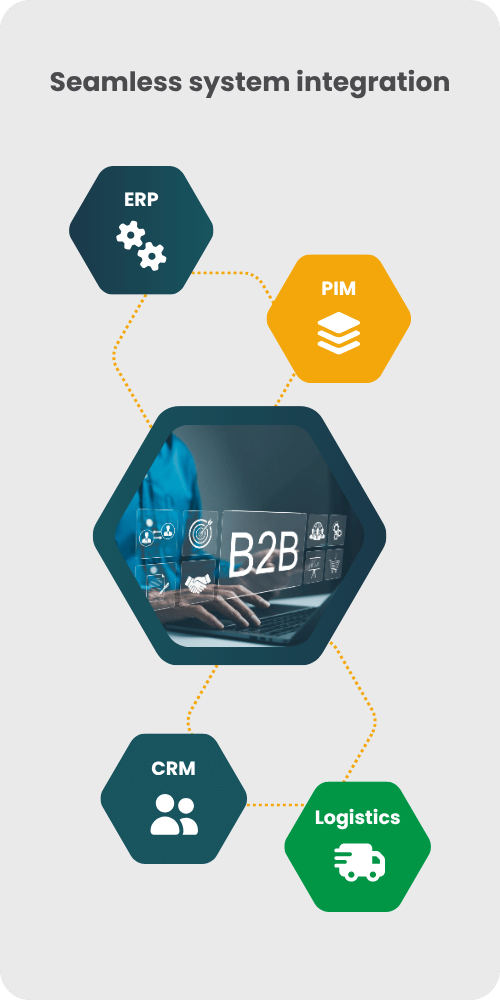
Seamless system integration is particularly important.
A B2B online shop is not a one-off project.
New features, marketplace integrations and process optimisations ensure that your shop remains competitive in the long term.
Arrange a free consultation
for your B2B online shop
A successful B2B shop is closely integrated with existing systems.
Typical integrations:
The integration enables automated data flows.
Examples:
This is how efficient digital processes are created without the need for manual work.
Companies in the automotive sector face particular challenges.
The TecDoc integration enables:
In the spare parts trade in particular, this function is crucial for efficient ordering processes.
Speed4Trade has extensive experience in implementing such solutions.
Many companies still process orders manually. A modern B2B online shop automates key processes:
This saves time and reduces errors.
Before
Orders by email
Manual data entry
Significant coordination effort
Afterwards
Automated orders in a B2B online shop
Direct ERP integration
Transparent processes
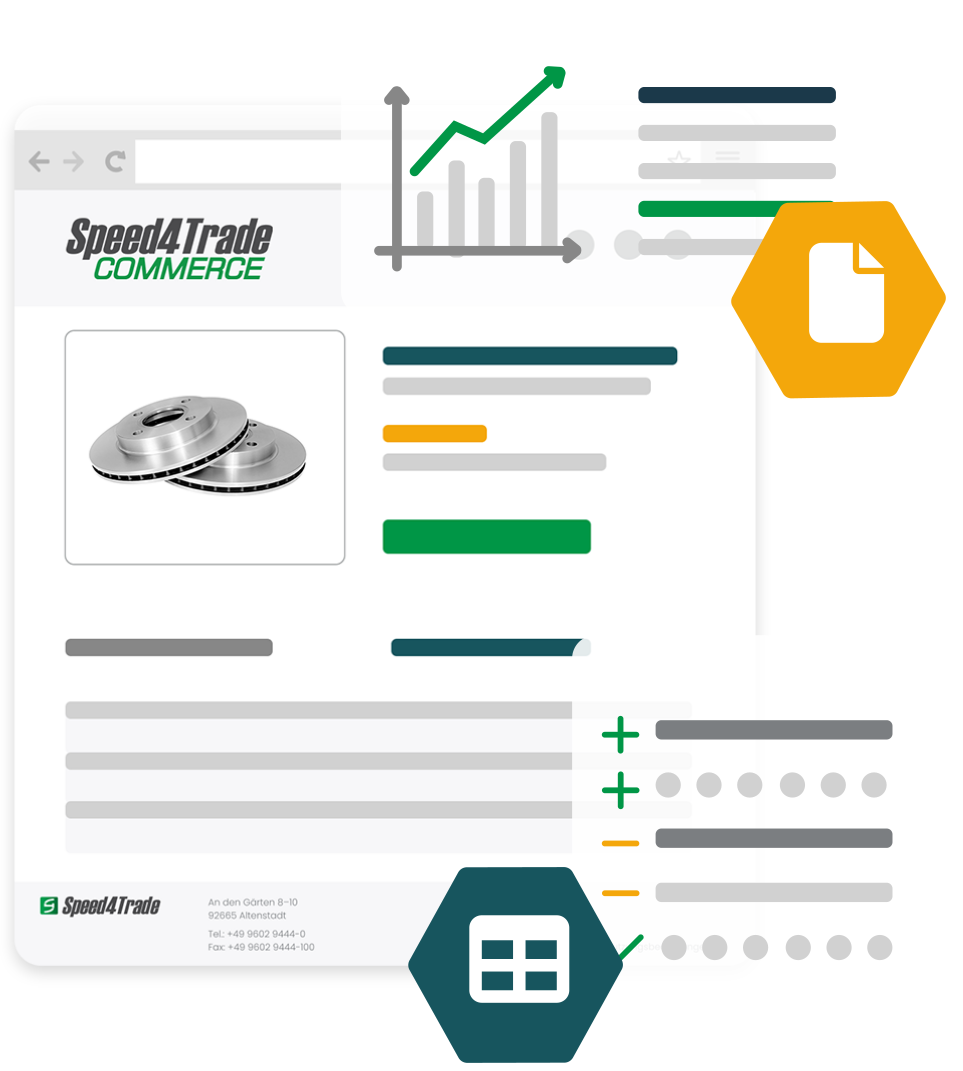
Many companies use B2B online shops to digitise their sales.
Typical results following implementation:
This leads to measurable efficiency gains, particularly in the wholesale sector and in industry.
Many projects fail not because of the technology, but because of poor planning.
Common mistakes:
An experienced B2B e-commerce provider takes these aspects into account right from the concept phase.
A quick self-assessment:
If several points are missing, it’s worth carrying out a modernisation.
A modern B2B shop is much more than just a digital product catalogue. It brings together sales, customer service and internal systems on a single central platform.
Companies benefit from:
With the right strategy and technology, your B2B online shop will become a key driver of growth.
Speed4Trade supports numerous companies in digitising their sales processes. These include manufacturers and distributors in the automotive aftermarket, as well as companies in related sectors.
Customers report, in particular, that this has eased the workload on back-office staff, led to more efficient ordering processes and increased transparency in sales.
A B2B shop is an online shop designed specifically for business customers. It offers features such as customised pricing, corporate accounts and system integrations.
To set up an online shop, businesses need a suitable e-commerce platform, product data, payment processing and integrations with existing systems.
Depending on the complexity, it usually takes several months to a year to set up a B2B online shop.
Without ERP integration, orders would have to be processed manually. An integrated B2B online shop fully automates these processes.
Talk to us about your next digital project.






* Thank you for filling in the required fields.
Sie sehen gerade einen Platzhalterinhalt von Vimeo. Um auf den eigentlichen Inhalt zuzugreifen, klicken Sie auf die Schaltfläche unten. Bitte beachten Sie, dass dabei Daten an Drittanbieter weitergegeben werden.
Mehr InformationenSie sehen gerade einen Platzhalterinhalt von YouTube. Um auf den eigentlichen Inhalt zuzugreifen, klicken Sie auf die Schaltfläche unten. Bitte beachten Sie, dass dabei Daten an Drittanbieter weitergegeben werden.
Mehr InformationenSie müssen den Inhalt von reCAPTCHA laden, um das Formular abzuschicken. Bitte beachten Sie, dass dabei Daten mit Drittanbietern ausgetauscht werden.
Mehr InformationenSie sehen gerade einen Platzhalterinhalt von Vimeo. Um auf den eigentlichen Inhalt zuzugreifen, klicken Sie auf die Schaltfläche unten. Bitte beachten Sie, dass dabei Daten an Drittanbieter weitergegeben werden.
Mehr InformationenSie sehen gerade einen Platzhalterinhalt von YouTube. Um auf den eigentlichen Inhalt zuzugreifen, klicken Sie auf die Schaltfläche unten. Bitte beachten Sie, dass dabei Daten an Drittanbieter weitergegeben werden.
Mehr InformationenSie sehen gerade einen Platzhalterinhalt von Bunny Stream. Um auf den eigentlichen Inhalt zuzugreifen, klicken Sie auf die Schaltfläche unten. Bitte beachten Sie, dass dabei Daten an Drittanbieter weitergegeben werden.
Mehr InformationenSie sehen gerade einen Platzhalterinhalt von Wistia. Um auf den eigentlichen Inhalt zuzugreifen, klicken Sie auf die Schaltfläche unten. Bitte beachten Sie, dass dabei Daten an Drittanbieter weitergegeben werden.
Mehr Informationen